Pages

Showing posts with label Farmers. Show all posts

Friday, 22 February 2013

The One-Sided Ceasefire

What a 'period of calm' looks like in the Occupied Territories
Ben White for Al Jazeera

"Three months have passed since the ceasefire that brought an end to Israel's eight-day attack on the Gaza Strip known as Operation "Pillar of Defence". This infographic depicts the number of attacks on the Gaza Strip by the Israeli military during this three-month period, as well as the number of Palestinian attacks emanating from Gaza. Since late November, Israeli attacks on the Gaza Strip have averaged over one a day, everyday. These include shootings by troops positioned along the border fence, attacks on fishermen working off the Gaza coast, and incursions by the Israeli army.

This data is important for three reasons. First, it is a response to the Western media's failure to cover the vast majority of Israeli attacks. This fits with a familiar and disturbing pattern, where a regional "period of calm" is exclusively defined in terms of attacks on Israelis. "Calm" from this perspective means security for Israelis - but more dead and injured Palestinians.

Second, data of this nature lay bare the daily reality for Palestinians and the power imbalance between the occupier and an occupied, colonised people fighting for their basic rights. It is instructive that the Israeli army refers to the entry of its forces into the Gaza Strip as "routine activity". Meanwhile, Israeli soldiers continue to snatch Palestinians from their homes in the West Bank, enforce segregation, and protect settler land theft. We have included numbers for Palestinians killed and wounded in the West Bank over this same period because developments there and in Gaza ought not to be viewed as isolated from one another.

Third, if or when there is another assault by Israel on the Gaza Strip, the Israeli government and many in the West will seek to emphasise the "rockets" narrative once again. So remember this data, and note what the Israeli army has been doing when - in the words of Israel's own consul general in Los Angeles - "for the last three months, there hasn't been a rocket fired from Gaza"."

 
Illustration and design -  Rachele Richards

Saturday, 9 February 2013

Palestinian Farmers Call for International Boycott

The International Day of Action for the Boycott of Israeli Agricultural Products - Day of Action in Zaytoun, Gaza and Madama, West Bank
 
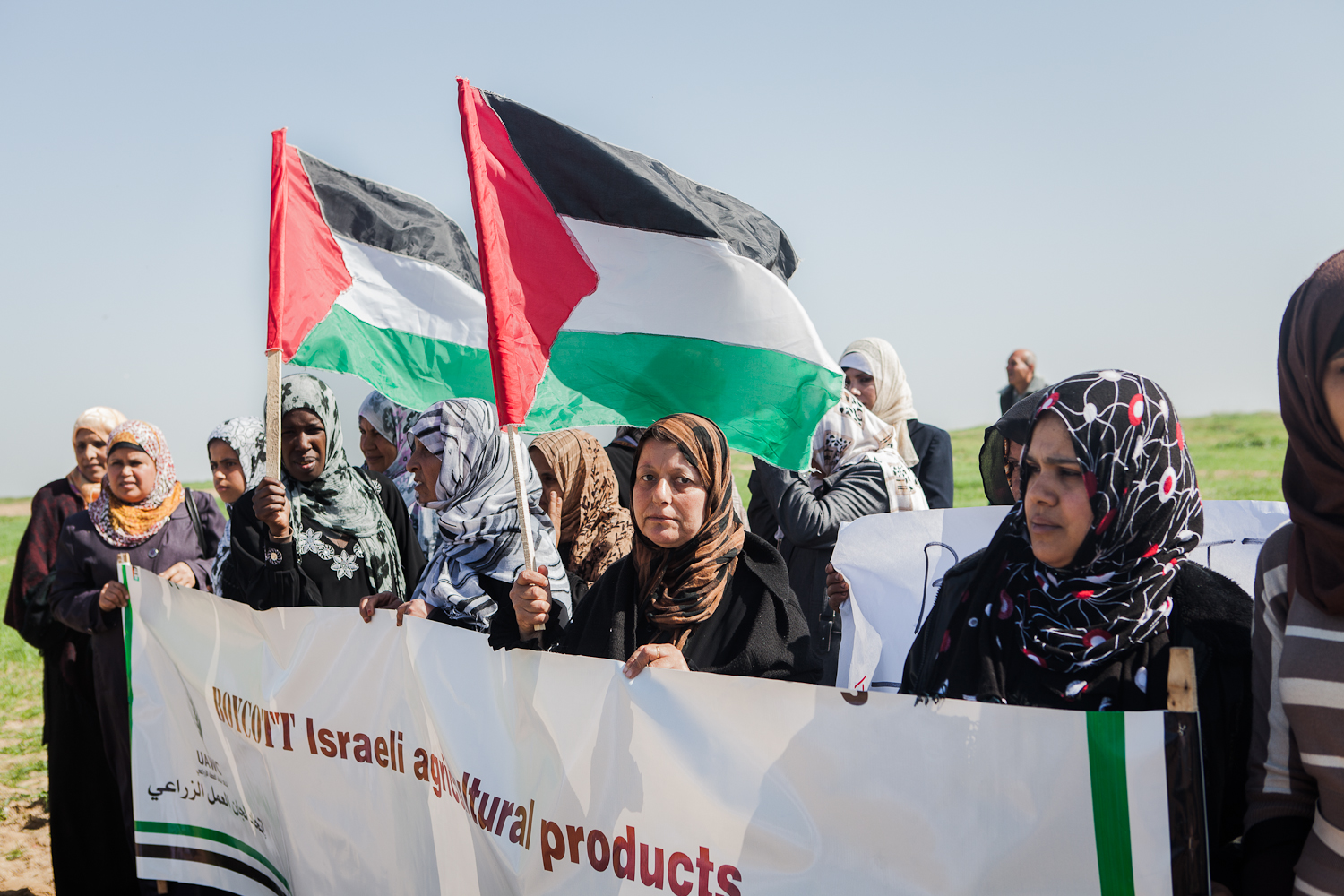
On Saturday 9th of February in the Zaytoun district on the outskirts of Gaza City, hundreds of local farmers and fishermen were joined by the Union of Agricultural Work Committees and activists from International Action for Palestine as they participated in the International Day of Action for the Boycott of Israeli Agricultural Products. They marched to Palestinian farmland in the 'buffer zone' near the eastern border of the Gaza Strip and planted olive trees on razed farmland which had previously contained vast numbers of olive and citrus trees until they were bulldozed by the Israeli army in recent years.


Planting olive trees in the ´buffer zone´ in Zaytoun, Gaza 
Photo courtesy of Desde Palestina

Palestinian farmers attempting to work on their land in border areas such as Zaytoun, all the way down the eastern length of the Gaza Strip, endure Israeli military aggression on a daily basis. A similar situation is faced by Palestinian fishermen trying to earn a living in Gazan waters, where Israeli naval gunboats open fire on them and abduct them and their fishing boats. Many farmers and fishermen have been injured and some have even been killed whilst going about their daily work. Since the ceasefire that was announced on 21st November, 4 Palestinians have been killed and over 80 have been injured in Gaza. The vast majority of these violations have taken place in the 'buffer zone'.

Demonstrators in Zaytoun, Gaza, calling for the boycott of Israeli agricultural products
Photo courtesy of Desde Palestina

In the West Bank, the villagers of Madama near Nablus, along with supporters from the Billal Najar Centre in nearby Burin and activists from the International Solidarity Movement marched from Madama to land belonging to the village. They planted olive trees where illegal settlers had destroyed hundreds of olive trees.

The village of Madama faces frequent collaborated attacks between Israeli settlers and soldiers. Settlers from Yitzhar settlement are notoriously violent, regularly attacking Palestinian farmers and shepherds from Madama and surrounding villages whose land they want to take. When Palestinians try to defend themselves from these attacks Israeli occupation forces take over, attack the Palestinians and kill, injure or arrest them to keep them off their own land.

Today's demonstrations in Occupied Palestine affirmed the call by Palestinian agricultural organisations and the Palestinian BDS National Committee for worldwide campaigns to boycott Israeli agricultural products and Israeli agricultural export corporations. These companies are deeply complicit in Israel’s ongoing violations of international law and Palestinian human rights. Whilst they profit from stolen Palestinian land, Palestinian farmers are unable to export their own produce, thereby crippling the Palestinian agricultural sector. The demonstrators called on the thousands of people simultaneously demonstrating in over 30 countries around the world to strengthen international BDS campaigns against the Israeli apartheid regime.

Mustafa Arafat, a farmer from Zaytoun, Gaza:
"The daily aggression suffered by us the Palestinian farmers every day must be highlighted to the world, so people can understand the reality of the attacks and the suffering that has continued throughout the recent ‘ceasefire’. The boycotts of Israeli companies in agriculture are so important as the Israeli occupation has destroyed our farming production and denied us the possibility of exporting our own products. International pressure on Israel is the only way our own economy will be allowed to develop and for us to live normal lives."

 
Zakaria Bakr, a fisherman from Gaza City:
"As some of the remaining Palestinian fishermen still able to fish, we urge all those around the world to launch campaigns to boycott Israeli Agricultural products and companies. Negotiations have for years only been a cover for making our lives worse. Boycotts are a peaceful activity and something that everyone can participate in. We have called for the boycotts because while our fishing industry, our communities and livelihoods have been destroyed by Israeli aggression, all of their industries have benefited from destroying and confiscating our land and violently denying our access to the sea."

Mamun Nassar, a shepherd from Madama, Nablus:
"I have been attacked, injured and beaten by settlers many times while tending my flock. I was just imprisoned for six weeks because I was attacked by settlers on our land. The settlers hit my face so hard they broke most of my teeth. My brother was shot and then arrested for trying to help me. All we want is to tend to our sheep."

Wednesday, 6 February 2013

Press Conference in Gaza Port


Today´s press conference in support of Palestinian farmers and fishermen held in the port of Gaza City launched several days of activities leading up to the International Day of Action for the Boycott of Israeli Agricultural Products on Saturday 9th February. Speakers were from the Boycott National Committee, the student boycott movement in Gaza, the Union of Agricultural Work Committees, PNGO and International Action for Palestine.

"The boycott of Israeli agricultural exports will remain an essential strategy as long as Palestinian farmers cannot export their produce due to closure and blockade. It must continue as long as Palestinian farmers cannot access their own land and work on it in safety, whilst Israeli corporations profit from stolen Palestinian land." - International Action for Palestine


Photos courtesy of Desde Palestina

Friday, 1 February 2013

A Day in the Life of a Gazan Farmer

Beit Hanoun, Gaza Strip
29th January, 2013


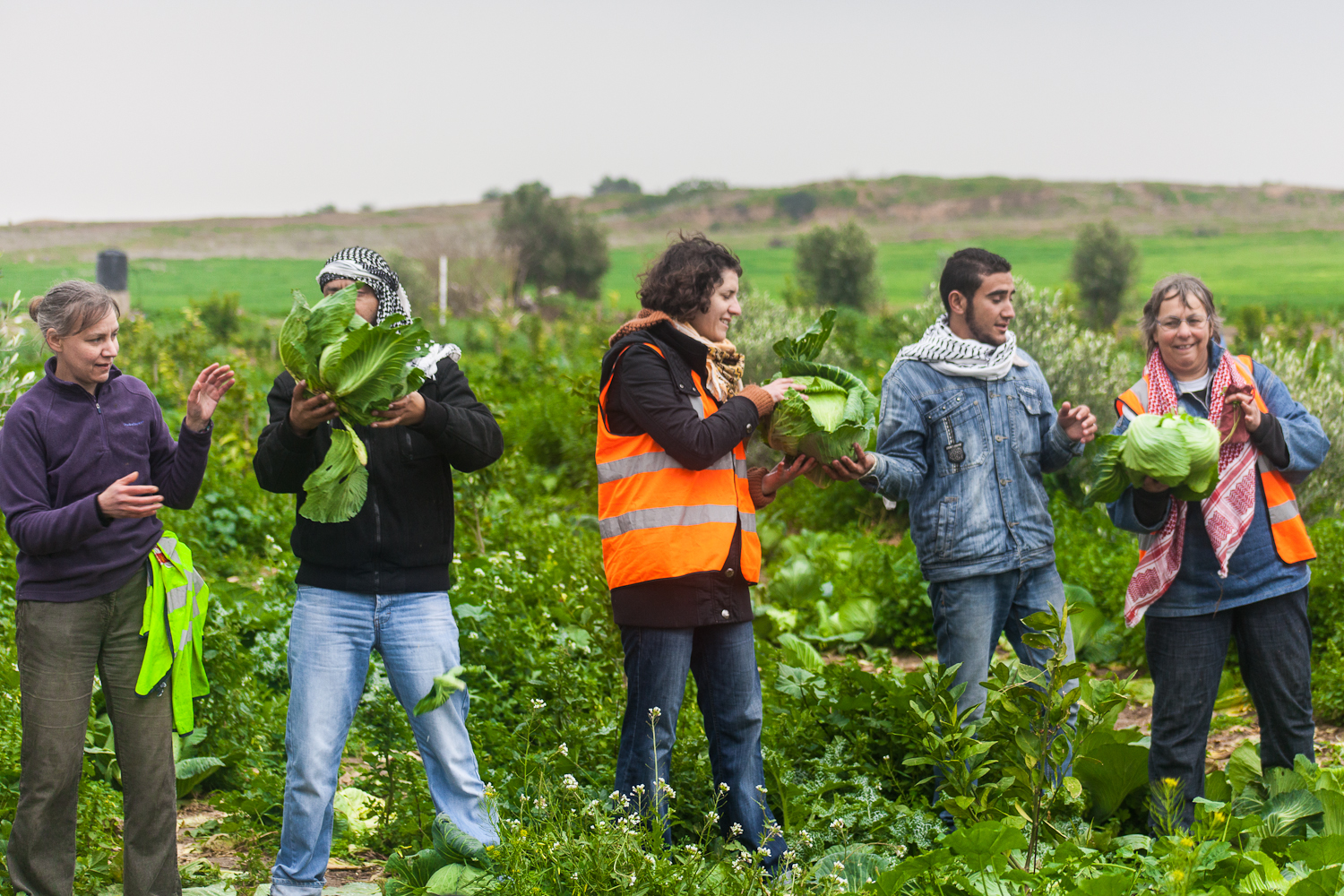
In the far north of the Gaza Strip, in the rural border area to the east of Beit Hanoun, farmers continued their daily struggle to work on their land. International volunteers from Spain, Germany, France and the UK accompanied farmers and Palestinian activists from the Beit Hanoun Local Initiative as they harvested cabbages in the light drizzle, whilst singing Palestinian folk songs. It would have been an idyllic pastoral scene if it weren't for the military jeeps and watchtowers on the border 400 metres away.


Photo courtesy of Desde Palestina

At about 11.00 a.m. we heard shots fired from the border. Unknown to us at the time, a small group of farm labourers had been tending olive and lemon trees about 300 metres away from the cabbage patch. 21 year-old Mamdouh Al-Kafarna had been shot and wounded by Israeli soldiers.

The farm labourers said they saw two Israeli military jeeps stop at the border fence so they left their work fearing that the soldiers in the jeeps may begin shooting. After the jeeps drove away the labourers thought it would be safe to return and continue their work.

However, on their return they realised that the jeeps had left two soldiers on the ground between the trees near the border fence. Apparently they were wearing foliage as camouflage. The soldiers began shooting towards the labourers and Mamdouh was injured in both legs by the same bullet. It brushed his right leg then entered and exited his left leg.

As he fell, Mamdouh saw the soldiers cross to the Palestinian side of the fence and enter the Gaza Strip a short distance. At the sight of them running towards him, Mamdouh was afraid they might abduct or even kill him. He desperately tried to get away even though moving must have been incredibly difficult due to his injuries and by this stage he had become separated from his fellow workers.

Amazingly, he managed to escape to safety and was evacuated from the area by donkey cart. He was eventually transferred to Beit Hanoun Hospital. Mamdouh is the eldest son in his family and only he and his father have work, supporting 20 people at home.

 Photo courtesy of Desde Palestina

The farmers explained that last year it had been too dangerous for them to access this land but they had attempted it now believing it to be safe due to the ceasefire. Unfortunately this is not the case. According to staff at Beit Hanoun Hospital, nearly 30 civilians have been injured in the northern border areas since last November.


Monday, 21 January 2013

Bulldozing the Ceasefire

Khuza'a, Gaza Strip
15th - 17th January, 2013

At about 8.30pm on Tuesday 15th January, Israeli tanks and military bulldozers breached the border adjacent to the village of Khuza'a, east of Khan Younis and intruded inside the Gaza Strip. The incursion into Palestinian farmland continued through the night and added to the long list of Israeli ceasefire violations.

Heavy shooting was reported during the assault but fortunately there were no injuries on this occasion. Also, explosions were heard but no homes were damaged. Terrified locals contacted the International Committee of the Red Cross but were told that the Israeli military wouldn't listen to anyone.

The raid continued on the night of Wednesday 16th January, when Apache helicopters were reported to have also been deployed. Then, on Thursday 17th January, the Israeli military aggression continued in the area for a third consecutive night.

A large swathe of agricultural land was damaged, about eight kilometres along the border fence and about 250 metres back from it. Within this area about 300 dumuns were razed, including wheat crops planted in December. Fields belonging to about 500 different farmers were affected, according to local officials. Farmers have attempted to approach their lands since the attack but haven't been able to reach land closer than 100 metres from the fence.


The mayor of Khuza'a, Kamal Al-Najar, explained that 800 of the 2,000 dunums of agricultural land in Khuza'a is close to the border fence and wasn't accessible prior to Israel's eight-day offensive on Gaza in November. At that time, farmers in Khuza'a had only been able to access their lands which lay half a kilometre or more from the border fence.
Since the ceasefire announcement, they have accessed land 300 metres from the fence and had managed to cultivate about 400 dunums within that area for the first time in ten years. However, most of this has now been destroyed in last week's attack. Over the course of the last ten years, the Israeli military has destroyed olive and citrus groves, greenhouses and water pumping facilities in the border areas.

For additional photos please see Desde Palestina

Monday, 14 January 2013

Israel's Definition of a Ceasefire

Beit Lahiya, Gaza Strip
Monday 14th January


Just three days after the fatal shooting of Anwar Al-Malouk near Jabalia, the Israeli military has murdered another Palestinian civilian despite a supposed ceasefire being in place. Mustafa Abu Jarad, 20, was one of a group of bird hunters working on a plot of land in an area north of Beit Lahiya in the very north of the Gaza Strip, over a kilometre away from the border fence.

From the border, the Israeli army began firing heavily in their direction and immediately targeted Mustafa directly in the forehead. The group had thrown themselves onto the ground and when the situation calmed enough for them to move they realised that Mustafa had been hit.

The bullet went straight through Mustafa's head leaving a massive exit wound. He was rushed to Kamal Adwan Hospital in the north of the Gaza Strip but was finally transferred to Al Shifa, Gaza's main hospital, due to the severity of his injuries. He arrived in a critical condition and underwent emergency surgery to remove bone fragments from the remaining part of his brain and to relieve internal bleeding. Unfortunately, he had sustained a massive brain trauma and his prognosis was bleak. He died in the ICU a few hours after the operation as his family anxiously waited for news.

Mustafa's older brother, Loay, was killed two and a half months ago whilst active with the Palestinian resistance. Mustafa had no involvement with the resistance himself. He was trying to earn a little extra income for his family whilst he completed his studies. The latest attacks increase the number of Palestinian casualties since the ceasefire announcement to nearly 80.

To further flout the ceasefire agreement, several Israeli military vehicles were reported to have breached the border with Gaza this morning in an agricultural area east of Khan Younis in the south of the Gaza Strip (Ma'an News Agency). After continual violations of the November ceasefire, committed by the Israeli military against Palestinian civilians, the question remains:

When will the international community take notice - and furthermore take action - to prevent an escalation of bloodshed?


Photo courtesy of Desde Palestina